GuideTechnology leadership
What does a CTO do? The five accountabilities behind the title
The title tells you very little. What matters is which decisions the CTO owns and answers for. This guide breaks the role into five accountabilities you can check against your own company.
- By
- Comtau Editorial
- Published
- Reading time
- 7 min
- Sections
- 7
The short answer
- A chief technology officer (CTO) is the executive accountable for how technology serves the business: what gets built, how it is built, who builds it and what could go wrong.
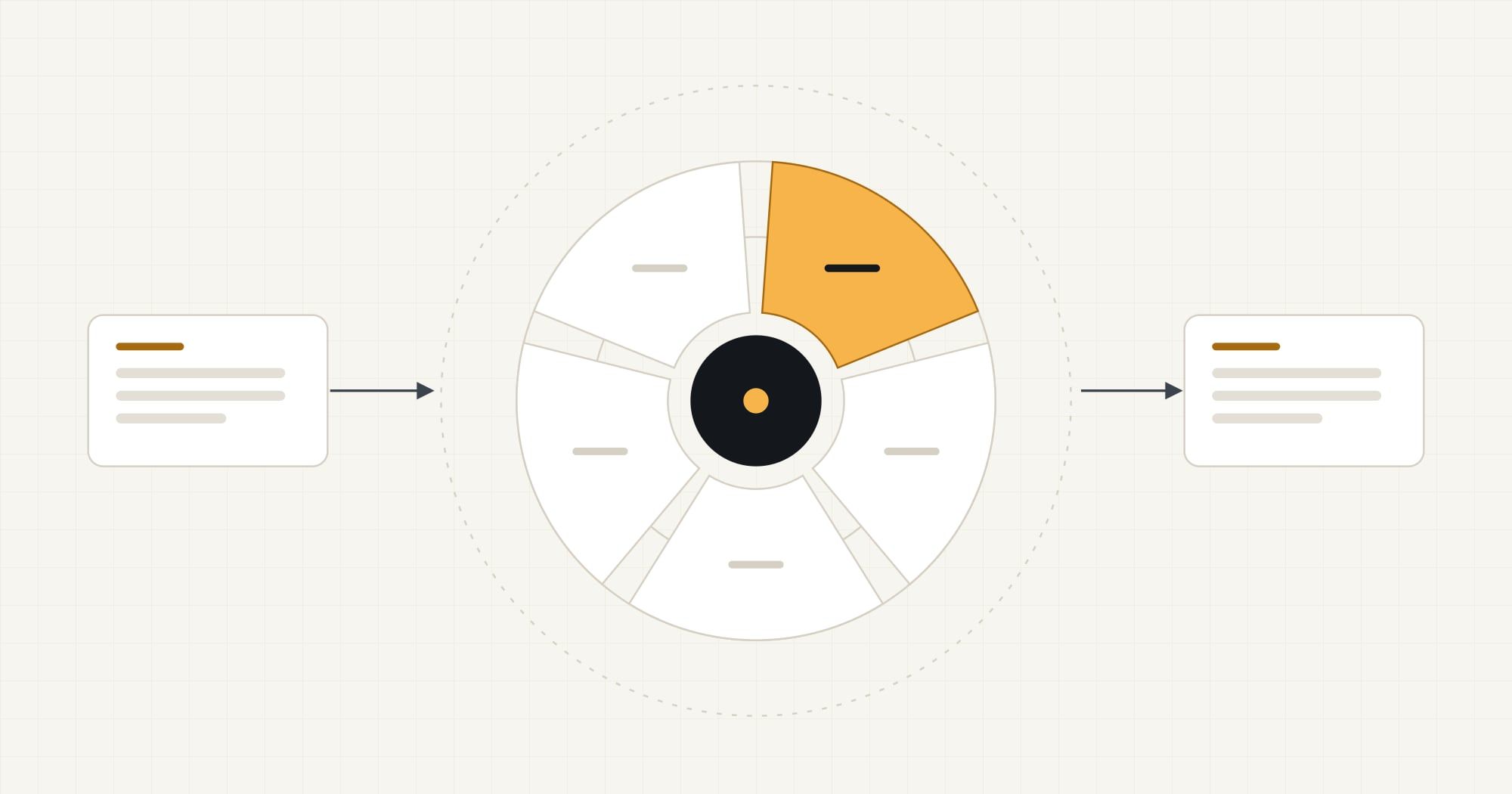
- The role is easiest to understand as five accountabilities: technology strategy, architecture, the engineering organisation, delivery and operations, and technical risk.
- The balance between them shifts as a company grows. Early on the CTO builds; later the CTO designs the organisation that builds.
- A company can have the title without the accountabilities, or the accountabilities without the title. The useful question is which of the five are owned today.
What a CTO is, and what the title does not tell you
The CTO is the most senior person accountable for technology in a company whose product or operations depend on software. In practice the title covers very different jobs. In a five-person startup the CTO may write most of the code. In a company of five hundred, the CTO may not have committed code in years and spends their time on investment decisions, organisation design and the board.
Because the title stretches so far, job descriptions rarely help. Lists of responsibilities tend to read like everything a technical person might ever do. A more useful definition is about accountability: the CTO is the person who answers for the outcome when technology helps or hurts the business, and who has the authority to make the decisions that drive that outcome.
That framing explains why founders often feel the gap before they can name it. The code may be fine. What is missing is someone who owns the decisions around the code: which trade-offs to accept, what to build next, when to hire, and which risks the company is quietly carrying.
The five accountabilities of a CTO
Every CTO role, at any size of company, is some mix of five accountabilities. The weighting changes; the list does not.
The CTO role as five accountabilities
Accountability map
- Technology strategyWhich technology bets support the business plan, what to build, buy or defer, and how much to invest.
- Architecture and technical decisionsThe shape of the system, the standards it follows and the significant decisions that are expensive to reverse.
- Engineering organisationHiring, team structure, leadership roles, ways of working and the engineering culture.
- Delivery and operationsTurning plans into working software predictably, and keeping it running, secure and supportable.
- Technical risk and governanceSecurity, data protection, vendor and key-person risk, technical debt, and how all of it is reported upward.
1. Technology strategy
The CTO translates the business plan into technology choices. That means deciding which capabilities the company must own and which it can buy, which platforms to standardise on, and how much engineering capacity goes to new product versus maintenance and risk reduction. It also means saying no: a CTO who agrees to every roadmap item is not doing strategy.
The visible output is usually a technology roadmap that leadership and engineers both believe. The less visible output is a set of decisions the CEO and board understand: why this architecture, why this hire, why this spend now.
2. Architecture and technical decisions
The CTO does not need to design every component, but owns the decisions that are expensive to reverse: the main platform and language choices, how the system is divided, how data is stored and shared, and which external services the product depends on. In a healthy organisation those decisions are written down with their context and consequences, so they can be reviewed later instead of re-argued from memory.
When architecture is nobody’s job, it is still being decided, one pull request at a time. The cost appears later as slower delivery and harder changes.
3. Engineering organisation
The CTO is responsible for the team that builds and runs the technology: who to hire and when, how teams are structured, who leads them, how engineers grow and how work is organised. As the company grows this accountability tends to take the largest share of the CTO’s time, and it is the one most often delegated to a VP or Head of Engineering.
4. Delivery and operations
Plans only matter if they turn into working software. The CTO answers for whether engineering delivers predictably, whether releases are safe, and whether the system stays up, recovers from incidents and can be supported. That does not mean managing tickets. It means making sure there is a delivery process, that it is measured, and that problems surface early.
5. Technical risk and governance
The final accountability is the one founders most often discover late, typically during a security incident, an enterprise customer’s security questionnaire or technical due diligence. The CTO owns the inventory of technical risk: security and data protection, dependence on vendors and on individual engineers, licensing, and the technical debt the company is carrying. Owning it means knowing what the risks are, deciding which to accept, and reporting them to the CEO and board in plain language.
How the CTO role changes as a company grows
The five accountabilities stay constant, but where the time goes changes with the company. The pattern below is typical rather than universal.
| Company phase | Where most CTO time goes | What the CTO hands to others |
|---|---|---|
| Before product-market fit | Building the product, choosing the first architecture, keeping options open | Very little; the CTO is often the main engineer |
| Early growth | Hiring the first engineers, setting delivery habits, paying down the shortcuts that block growth | Day-to-day coding, some operations |
| Scaling | Organisation design, leadership hires, architecture for scale, security and compliance | Team management and delivery to engineering managers or a VP of Engineering |
| Mature | Technology investment, governance, risk reporting, external stakeholders | Most execution; the CTO works through other leaders |
For a stage-by-stage view of what a startup needs from technical leadership, and when it can wait, see Comtau’s guide to the startup CTO role by stage.
CTO vs VP of Engineering: is a CTO higher than a VP?
In most companies that have both roles, the CTO is the more senior executive and reports to the CEO. A VP of Engineering commonly reports either to the CTO or, in some organisations, directly to the CEO alongside the CTO. Titles are not standardised, so the reporting line in a specific company is the only reliable answer.
The more useful distinction is the split of accountabilities. A common pattern is for the CTO to keep technology strategy, architecture and technical risk, while the VP of Engineering owns the engineering organisation and delivery. The two roles work when that split is explicit. They fail when both assume the other is handling hiring, or when neither owns architecture.
The CTO is also often confused with the CIO. The short version is that a CTO is usually accountable for technology in the product, while a CIO is accountable for the systems that run the business. The full comparison is in CTO vs CIO.
What a CTO is not
- Not necessarily the strongest engineer. Strong engineering judgement matters, but the job is to make the whole organisation effective, not to be its best individual contributor.
- Not the IT manager. Laptops, office systems and internal tools may fall under the CTO in a small company, but that is a different discipline from building a product.
- Not a project manager. The CTO answers for delivery, but tracking tasks is not the same as owning the outcome.
- Not a translator who relays requests. A CTO who passes business requests to engineers without challenging them has given up the strategy accountability.
How to tell whether your company has the role covered
The test is not whether someone holds the title. It is whether each accountability has an owner who can answer for it. Use the checklist below with your leadership team; any box nobody can tick with confidence is a gap.
CTO accountability checklist
Checklist
Strategy
- Someone can explain which technology investments support this year's business plan
- Build, buy and defer decisions are made deliberately, not by default
- Engineering capacity is split between new work, maintenance and risk on purpose
Architecture
- Significant technical decisions are written down with their reasons
- Someone owns the overall shape of the system
- The current architecture can support the next 12 to 18 months of plans
Organisation
- There is a hiring plan tied to the roadmap
- Every engineer knows who they report to and how they grow
- Leadership roles below the CTO are defined
Delivery and operations
- Delivery is measured, and slippage is visible early
- Releases are routine rather than risky events
- Incidents are reviewed and their causes fixed
Risk and governance
- There is a current list of technical risks and their owners
- Access to production and critical accounts does not depend on one person
- The CEO and board receive technology reporting they understand
Options when the accountabilities are not owned
When the checklist shows gaps, the answer is not always a full-time CTO hire. The right option depends on how much senior attention the company needs and for how long.
- A full-time CTO makes sense when technology is the core of the product and the company can give the role enough scope to justify a permanent executive.
- A technical co-founder brings ownership and long-term commitment, but is a partnership decision rather than a hiring one.
- A fractional CTO provides the same accountabilities part-time. It suits companies that need senior judgement and ownership but not forty hours of it every week.
- An interim CTO covers a gap between permanent leaders, stabilises the function and hands over.
- An advisor gives counsel without owning decisions. Useful, but it does not close an accountability gap on its own.
Whichever route you choose, write down which of the five accountabilities the person owns. Most failed CTO hires are not failures of skill. They are failures of an unclear mandate.